


There are some financial systems so powerful that they quietly change how entire countries move money.
India's UPI is one of them. Nigeria's NIBSS is another.
Both were built to solve a simple problem: make moving money instant, reliable, and accessible at scale. And both succeeded.
But here is the interesting part: despite the scale of these systems, they still barely connect to each other. That is not just a missed opportunity. It may be one of the most overlooked payment corridors in global fintech today.
How India's UPI Became Global Infrastructure
India's UPI has become a case study in what modern payment infrastructure can look like when adoption, regulation, and technology align. In December 2025 alone, UPI processed 21.63 billion transactions. That is more than just growth. That is infrastructure becoming part of everyday life.
And India is no longer keeping UPI within its borders.
Through NPCI International and the Reserve Bank of India, the country is actively pushing UPI into global markets through remittance partnerships, merchant integrations, and cross-border payment systems. The ambition is clear: make UPI part of how the world moves money.
How Nigeria Built Its Own Real-Time Payment Foundation
NIBSS Instant Payment has quietly become one of the most important financial rails in Africa. It powers real-time bank transfers across the country and connects deeply with banks, fintechs, payment providers, and mobile money systems.
In many ways, Nigeria built its own version of instant financial infrastructure long before the rest of the continent fully caught up.
What makes this interesting is that both countries arrived at similar outcomes from completely different paths.
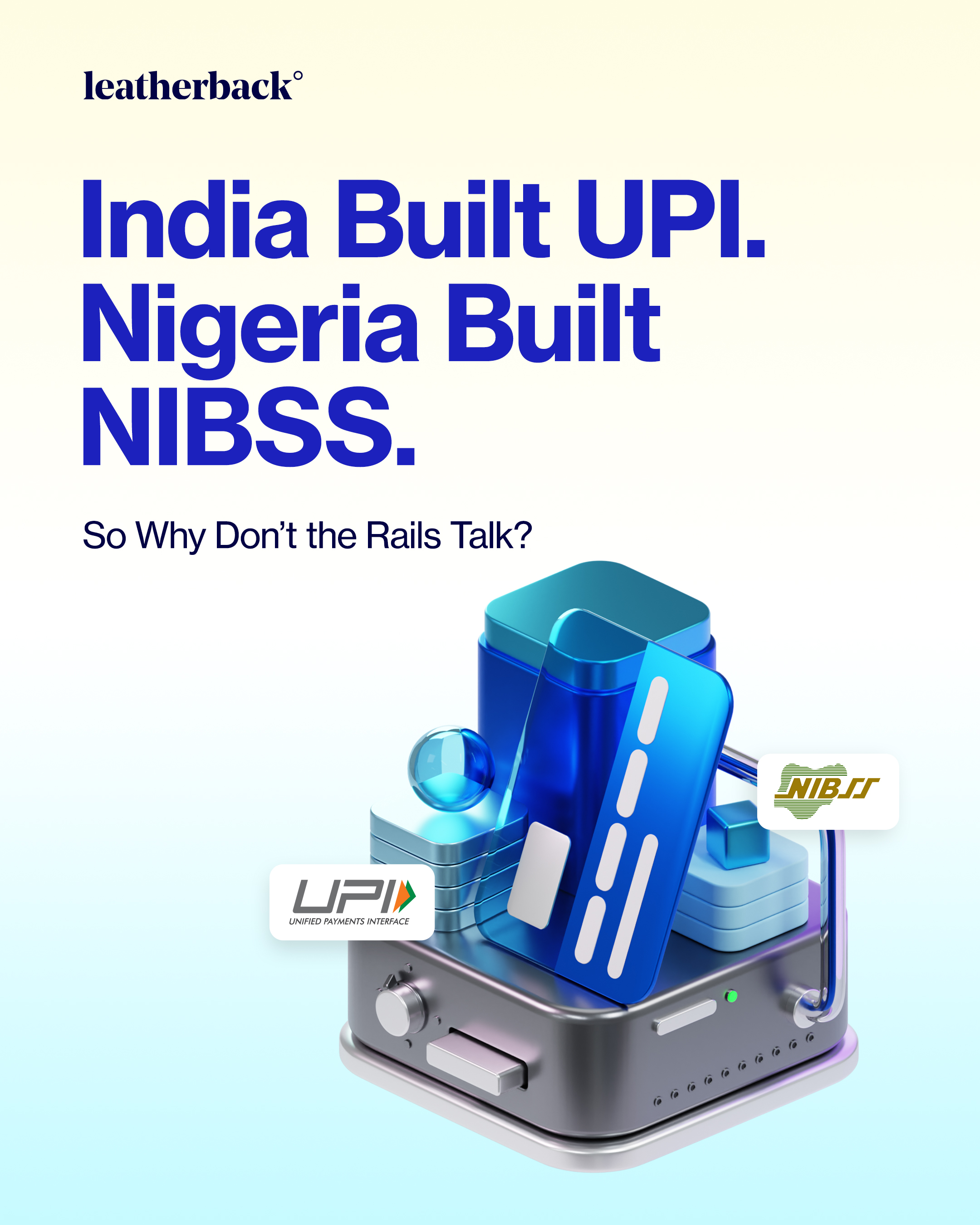
- India built UPI. Nigeria built NIBSS.
- Both created fast, scalable domestic payment systems.
- Both process massive transaction volumes.
- Both sit at the centre of rapidly growing digital economies.
Yet the corridor between them still behaves like old-world banking.
Why the India-Nigeria Payment Corridor Matters Now
The economic relationship between both countries is growing faster than most people realise. Indian businesses already have a major footprint across Nigeria in sectors like pharmaceuticals, manufacturing, infrastructure, and technology. At the same time, remote work, outsourcing, freelance tech services, and digital trade are creating new flows of money between African talent and Indian businesses.
The movement is already happening. The rails simply are not connected well enough yet.
So payments still pass through layers of correspondent banks, settlement intermediaries, and legacy systems that were never designed for internet-speed economies. That creates friction everywhere: transfers become slower, fees become higher, and settlement becomes unnecessarily complicated.
The Real Cost of Disconnected Payment Rails
For years, cross-border corridors into Africa have remained among the most expensive globally. Even with fintech improving the experience, many international transfers still carry fees between 3% and 5%.
But globally, one thing is becoming increasingly obvious: when payment rails connect directly, costs fall dramatically. That is already happening in some UPI-linked corridors, where direct integrations have reduced remittance costs significantly while cutting settlement times from days to minutes.
The Opportunity: Building the Infrastructure Layer Between Two Digital Giants
This is where the Nigeria-India opportunity becomes bigger than remittance. Because whoever successfully connects African payment infrastructure to UPI is not just building another transfer product. They are building financial rails between two fast-growing regions that are becoming more digitally connected every year.
And Nigeria is one of the strongest entry points for that future. Not just because of market size, but because the country already has a mature domestic payment infrastructure with strong fintech adoption and real-time banking capabilities.
The Quiet Infrastructure Play
The next era of fintech may not belong to the companies building the loudest apps. It may belong to the companies building the quietest infrastructure: the ones connecting systems, reducing friction, and making global payments feel local.
India built UPI. Nigeria built NIBSS. The real opportunity starts when those rails finally begin speaking to each other.


-blue.svg)

