


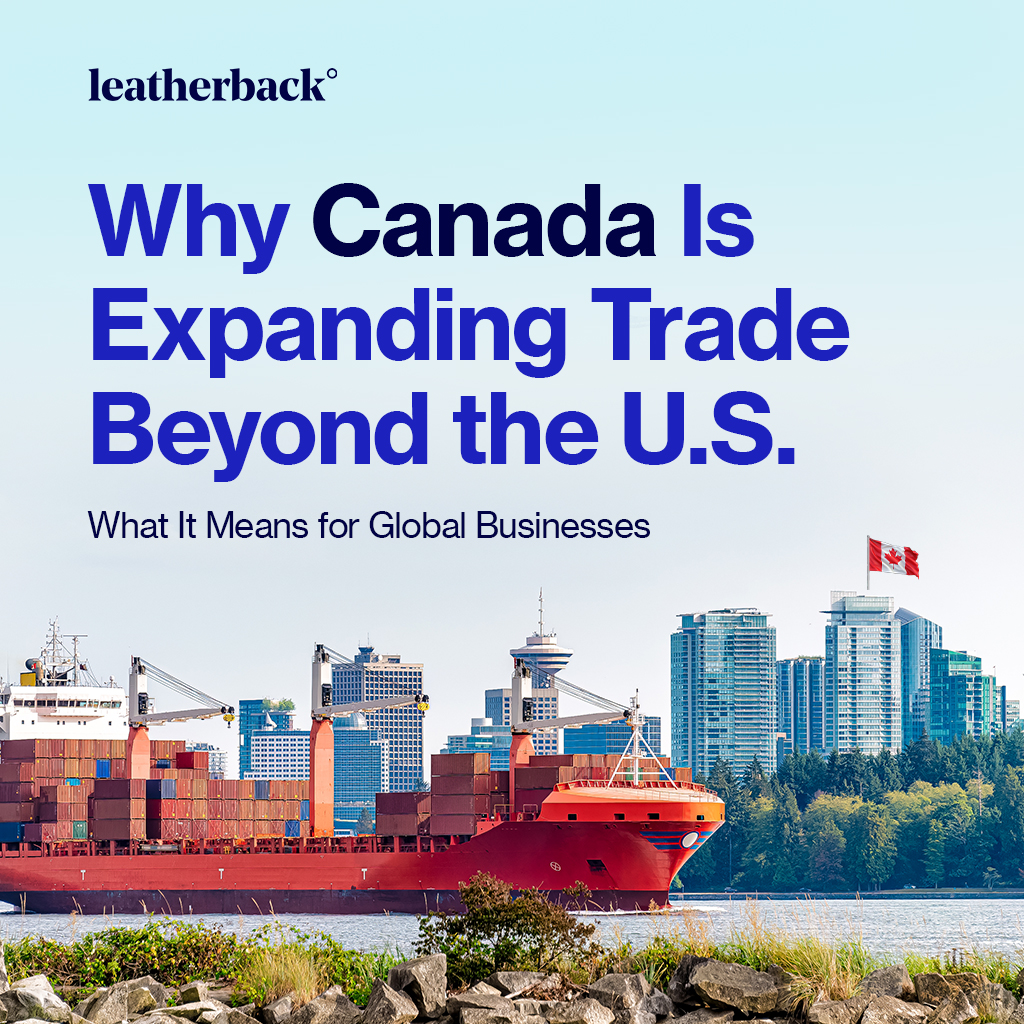
For decades, Canada’s economy has been closely tied to one major partner: the United States. It made sense—shared borders, strong infrastructure, and deep economic ties made cross-border trade seamless.
But that model is changing.
Canada is now actively working to reduce its dependence on the U.S. and expand trade into Asia, particularly markets like India, Japan, and Australia. This shift is not just political—it’s economic, strategic, and increasingly urgent.
If you’re a business operating in or with Canada, understanding this shift is critical. It directly affects how money moves, where opportunities lie, and how you should position for growth.
Why Canada Is Moving Beyond the U.S.
The U.S. has historically accounted for the majority of Canada’s exports. While this has provided stability, it has also created over-reliance on a single market.
That dependence comes with risks:
- Trade tensions and tariffs can disrupt entire industries
- Policy changes in the U.S. can ripple into Canada’s economy
- Limited diversification restricts global growth opportunities
In response, Canada is taking a more balanced approach—one that spreads trade across multiple regions instead of relying heavily on just one.
This is where Asia comes in.
Why Asia Is a Strategic Focus
Canada’s pivot toward Asia is not random. Markets like India, Japan, and Australia offer specific advantages that align with Canada’s strengths.
India brings scale. With a rapidly growing economy and increasing demand for services, technology, and commodities, it represents a major opportunity for Canadian exporters.
Japan offers stability. It is a mature, high-value market with strong demand for energy, agriculture, and advanced materials.
Australia provides strategic alignment. While smaller, it shares similar economic structures and acts as a gateway into the broader Asia-Pacific region.
Together, these markets create a diversified trade network that reduces risk and opens new growth channels.
What This Means for Canadian Businesses
This shift changes how businesses operate.
Instead of focusing primarily on one trade corridor (Canada–U.S.), companies now have to think globally. That introduces both opportunity and complexity.
Businesses expanding into Asia must now manage:
- Multiple currencies (CAD, INR, JPY, AUD)
- Different payment systems and settlement timelines
- Varying regulatory and compliance requirements
In simple terms, trade is no longer linear, it’s multi-directional.
The Hidden Challenge: Moving Money Across Borders
As trade expands, payments become more complicated.
In a U.S.-focused model, most transactions revolve around USD. But with Asia in the mix, businesses now deal with a broader range of currency pairs and financial systems.
This creates new challenges:
- Currency conversion costs can eat into margins
- Slow settlement times can delay operations
- Lack of transparency makes it harder to plan and scale
For growing businesses, these are not minor inconveniencesthey directly impact profitability and efficiency.
Why Multi-Currency Infrastructure Matters More Than Ever
To operate effectively in this new trade environment, businesses need financial systems that match their global ambitions.
This is where solutions like multi-currency accounts, real-time FX visibility, and flexible payout rails become essential—not optional.
Instead of relying on traditional banking systems that were built for simpler trade flows, businesses now need tools that can:
- Handle multiple currencies seamlessly
- Provide transparent exchange rates before transactions
- Enable fast payouts across different regions
How Leatherback Fits Into This Shift
As Canada expands its trade footprint, platforms like Leatherback are positioned to support businesses navigating these changes.
With Leatherback, businesses can:
- Send and receive funds across multiple currencies
- Access real-time FX rates before making transactions
- Manage cross-border payments without the typical banking friction
This becomes especially valuable for companies dealing with CAD to INR, CAD to Asia-Pacific markets, or other emerging trade corridors.
Canada’s move to reduce dependence on the U.S. marks a significant shift in global trade dynamics. It signals a future where Canadian businesses are more globally distributed, more resilient, and more connected to high-growth markets.
But with that opportunity comes complexity, especially in how money moves.
Businesses that adapt early by building flexible, multi-currency financial systems will be better positioned to scale in this new environment.
Because in today’s world, expanding globally isn’t just about where you trade.It’s about how efficiently you can move money when you get there.


-blue.svg)

